
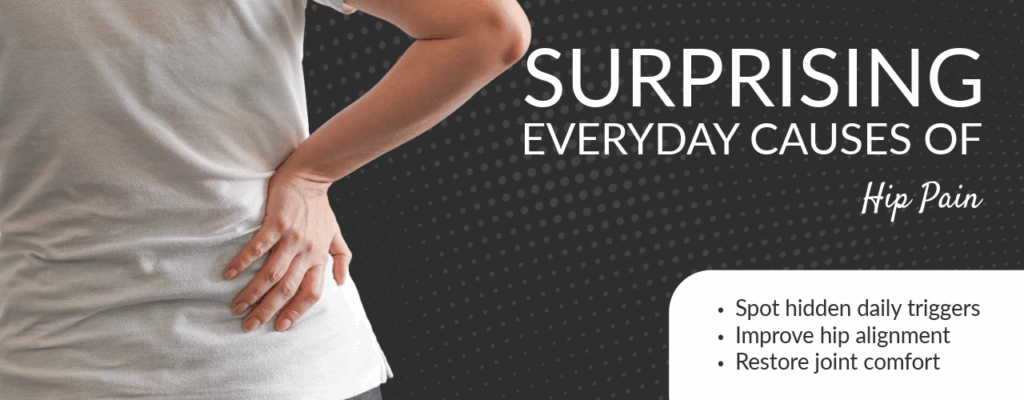
Many people think hip discomfort comes only from injuries or arthritis, but daily habits often play a bigger role than expected. Small choices in posture, movement, and lifestyle can quietly contribute to discomfort over time. By understanding these less obvious hip pain causes, patients can take steps to reduce strain, improve mobility, and protect long-term joint health.
A Checklist of Overlooked Hip Pain Causes
While hip pain can come from direct injury, the following everyday factors are just as common. Here are some overlooked hip pain causes worth noting:
Sitting for long hours
- Extended sitting shortens hip flexors and weakens supportive muscles.
Poor posture at work
- Slouching or leaning to one side adds uneven stress to the hips.
Unsupportive shoes
- Worn-out or flat shoes can shift alignment, affecting the hips.
Carrying heavy bags on one side
- Uneven loading throws off balance and strains hip joints.
Sleeping on one side without support
- Side sleeping without a pillow between the knees can twist the hips.
Repetitive movements
- Jobs or activities that involve bending, climbing, or twisting can lead to irritation.
Weak core muscles
- Without core support, the hips absorb more strain during daily activities.
Skipping warm-ups before exercise
- Jumping into an activity without preparing the muscles increases the risk of strain.
Old injuries left untreated
- Past ankle, knee, or back issues can shift mechanics, leading to hip problems later.
Excessive high-impact activity
- Running or jumping without balance from strength training can aggravate the hips.
A Checklist for Recovery and Prevention
Physical therapy offers effective tools for both recovery and prevention of hip discomfort. Here are practical strategies to address common hip pain causes and support long-term wellness:
Take frequent breaks from sitting
- Stand, walk, or stretch every 30–60 minutes to keep hips mobile.
Strengthen glutes and core
- Building support in these areas reduces pressure on the hip joints.
Stretch tight hip flexors
- Gentle stretching after long sitting periods restores balance.
Upgrade your footwear
- Supportive shoes or custom orthotics improve alignment and reduce strain.
Balance activity with rest
- Alternate high-impact workouts with lower-impact activities like swimming or cycling.
Use proper lifting techniques
- Bend at the knees, keep loads close, and avoid twisting to protect hips.
Incorporate posture training
- Learn neutral spine and hip alignment to reduce daily stress.
Add stability and balance exercises
- Training balance improves muscle control and reduces fall risk.
Sleep with proper support
- A pillow between the knees can align the hips and spine during side sleeping.
Stay consistent with a therapy program
- Following a customized home exercise plan ensures progress beyond the clinic.
Why Professional Care Matters
While self-care strategies can reduce discomfort, professional guidance ensures treatment addresses the true source of pain. A physical therapist evaluates posture, strength, mobility, and movement patterns to design a personalized plan. This approach not only improves current symptoms but also prevents them from returning.
At Elevate Physical Therapy & Sports Medicine, therapists use hands-on care, targeted exercises, and education to help patients manage hip pain causes effectively and return to an active lifestyle.
Moving Toward Hip Health and Confidence
Hip discomfort should not hold you back from work, exercise, or everyday routines. With the right care, patients can restore mobility, reduce strain, and prevent flare-ups.
At Elevate Physical Therapy & Sports Medicine, we provide evidence-based treatment plans designed for your lifestyle and goals. Whether your pain comes from posture, activity, or past injuries, our team can help you address the underlying hip pain causes and move forward with strength and confidence.
Contact Elevate Physical Therapy & Sports Medicine today to schedule an evaluation and begin your path to healthier, stronger hips.
Tags: hip pain relief, posture tips, core strength, movement habits