

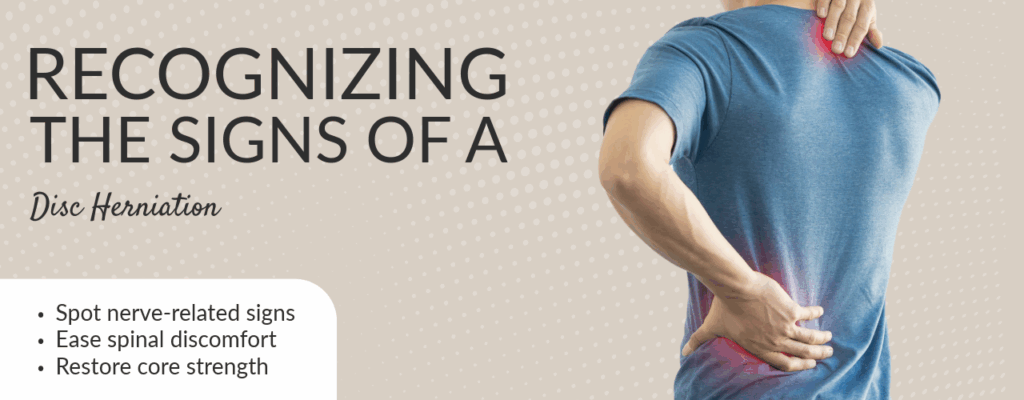
Back pain can come from many sources, but when a spinal disc presses on nearby nerves, the discomfort can feel sharper, more intense, and harder to ignore. Identifying disc herniation symptoms early helps patients get the right treatment before the condition worsens. With professional guidance and smart self-care strategies, most people can manage symptoms effectively and protect long-term spinal health.
A Checklist of Disc Herniation Symptoms to Watch For
Because the spine supports nearly every movement, disc problems often show up in more than one way. Here are the most common disc herniation symptoms to be aware of:
Sharp or shooting pain down the leg
- Often called sciatica, this pain usually follows the path of the affected nerve.
Numbness or tingling
- Sensations may appear in the buttocks, thighs, calves, or feet.
Localized back or neck pain
- Pain at the site of the herniated disc can feel sharp or achy.
Weakness in one leg or arm
- Muscle weakness may make it difficult to lift, push, or grip objects.
Pain that worsens with certain movements
- Coughing, sneezing, or bending forward often increases discomfort.
Difficulty standing or sitting for long periods
- Prolonged positions may trigger or worsen symptoms.
Changes in walking pattern
- Some patients notice limping or imbalance due to pain and weakness.
If several of these symptoms are present, professional evaluation is important to confirm the diagnosis and create a treatment plan.
A Practical Checklist for Recovery and Relief
Recognizing the signs is the first step. The next is knowing how to manage them safely. Physical therapy offers proven strategies to treat disc herniation symptoms while protecting the spine from further irritation. Here are practical tips often included in therapy programs:
Use proper posture during daily tasks
- Keeping the spine aligned reduces pressure on discs and nerves.
Strengthen the core and hips
- Building supportive muscles lowers strain on the back.
Take frequent movement breaks
- Standing and stretching for a few minutes each hour prevents stiffness.
Practice safe lifting techniques
- Bend at the knees, keep objects close, and avoid twisting.
Incorporate gentle stretching
- Movements that lengthen the back and legs reduce nerve tension.
Use heat for stiffness
- Warmth helps relax tight muscles around the spine.
Apply cold briefly after activity
- Cold can minimize irritation if symptoms flare up.
Train balance and stability
- Exercises that improve coordination help protect against future injuries.
Follow a customized home exercise program
- Consistency between clinic visits is key to progress.
Stay active within safe limits
- Avoiding complete rest prevents weakness and stiffness from setting in.
Why Professional Care Makes the Difference
Self-care can help, but it does not replace a tailored plan from a licensed therapist. Physical therapists assess which movements worsen your pain, which improve it, and how your body compensates. From there, they create an individualized program to restore strength, flexibility, and function. Addressing the root cause of disc herniation symptoms reduces the risk of recurrence and helps patients return to daily life with more confidence.
Moving Toward Relief and Stronger Spinal Health
Living with disc pain can feel overwhelming, but the right support can change the outlook. With expert care, patients learn how to manage symptoms, regain mobility, and prevent flare-ups.
At Elevate Physical Therapy & Sports Medicine, our team specializes in creating personalized treatment plans for spinal conditions. By combining hands-on therapy, targeted exercise, and patient education, we help you manage disc herniation symptoms and return to the activities that matter most.
Contact Elevate Physical Therapy & Sports Medicine today to schedule an evaluation and start your path to recovery with evidence-based care designed for you.
Tags: spine health, nerve compression, disc pain relief, mobility tips